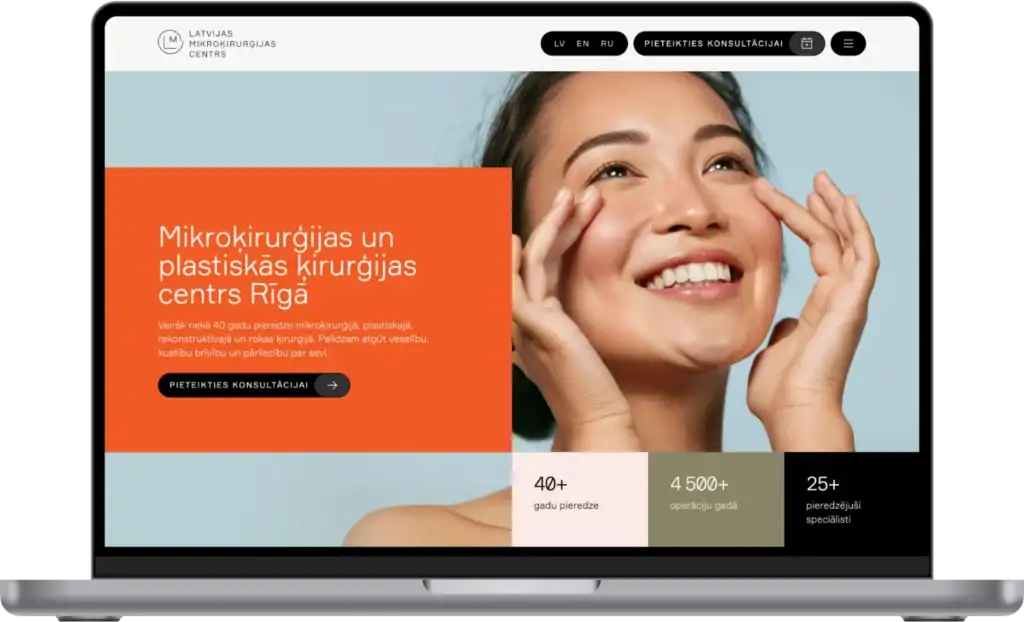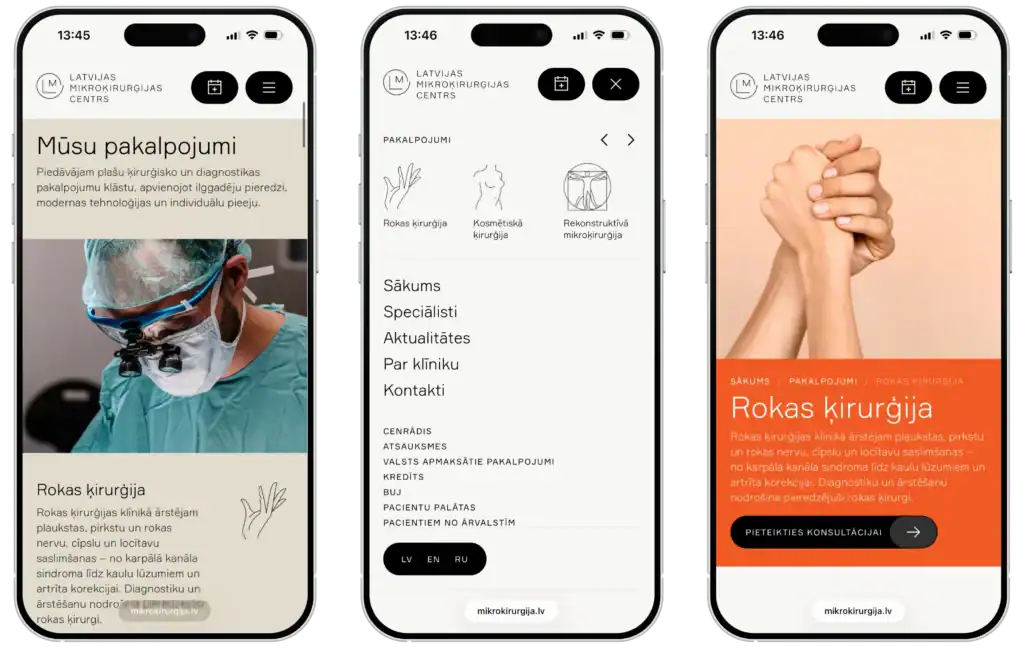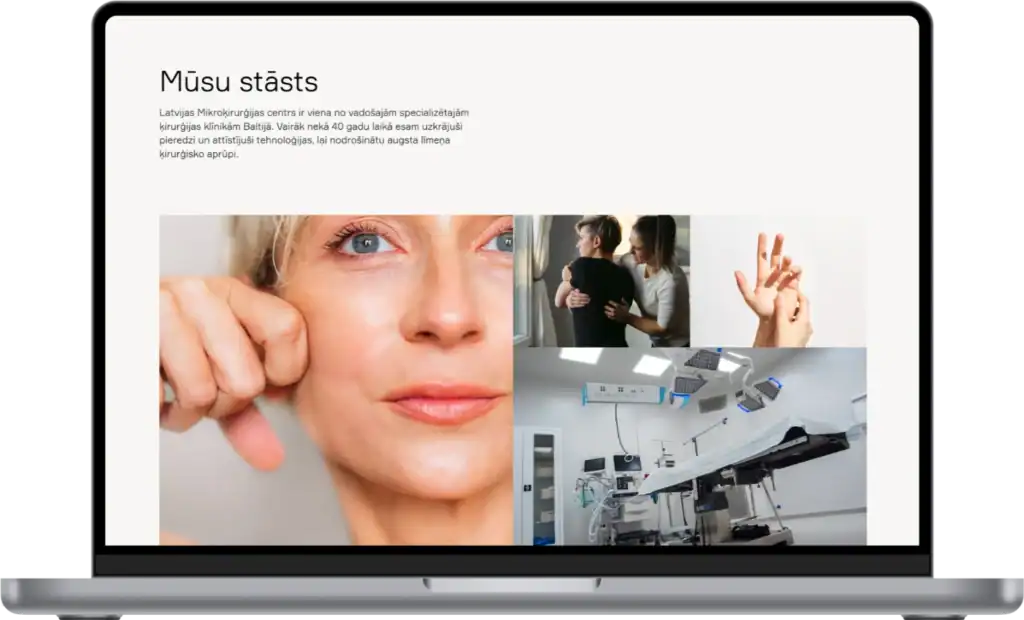


Latvijas Mikroķirurģijas centrs (LMC) specialises in plastic surgery, hand surgery and reconstructive microsurgery. Its new website needed to reflect that expertise while making complex services easier to understand. Patients needed to find procedures, learn about surgeons and request a consultation. The team needed to update content and prices themselves.
The old website already brought in substantial traffic from Google. It also held years of articles, service descriptions and specialist information. Rebuilding it meant taking care with existing content and links, rather than starting from scratch and putting that search visibility at risk.
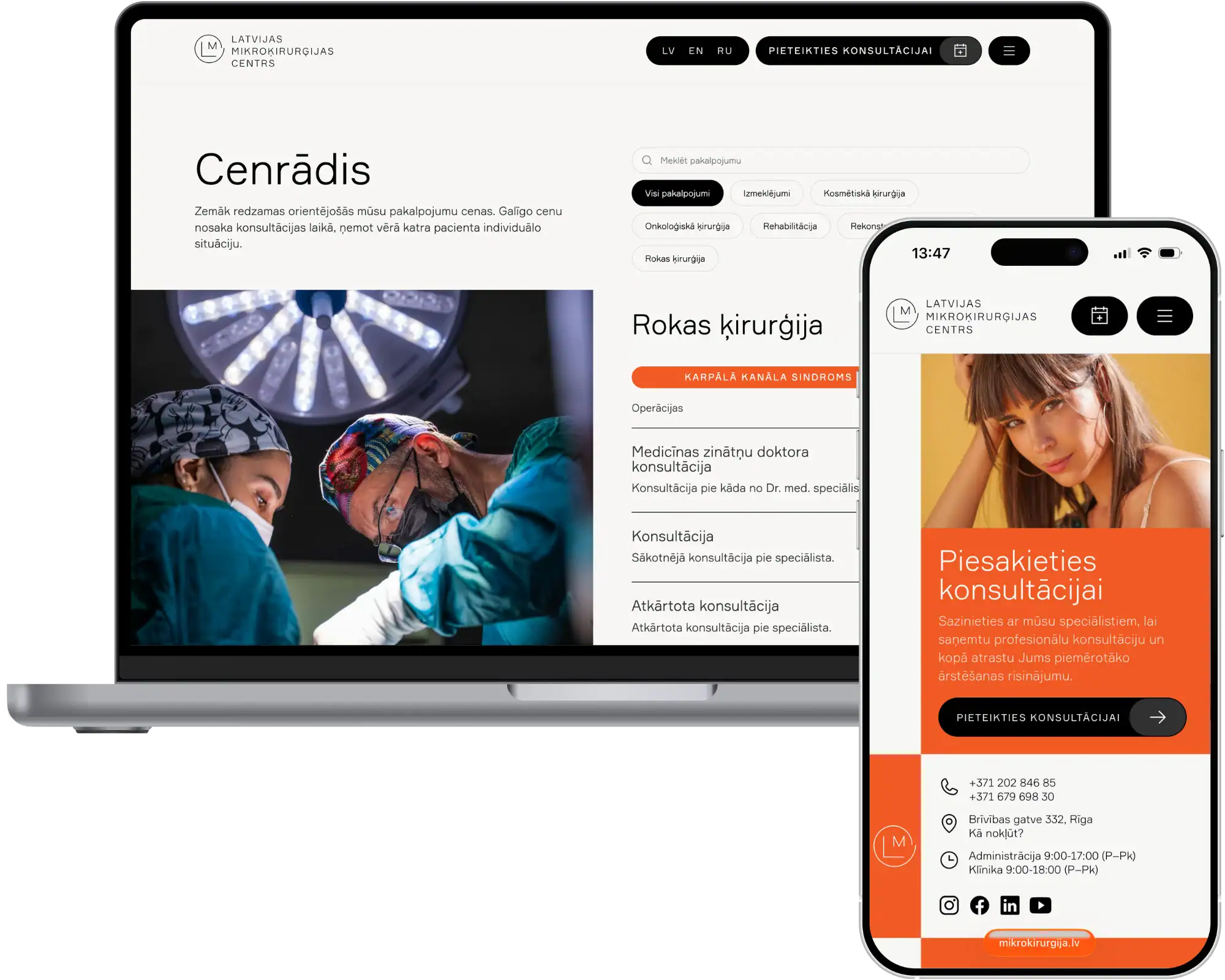
Pricing was a particular challenge. The same consultation fee could appear on several service pages and in the full price list. The client wanted to change it once, not track down and edit every place it appeared.
We designed and built a custom WordPress website for LMC in Latvian, English and Russian. Working from the clinic’s brand book, our UX designer created clear layouts for its plastic surgery, hand surgery and reconstructive services. Procedure information, surgeon profiles and consultation forms are linked so patients can find the next step without searching through unrelated pages.
We built a central price table that works much like a spreadsheet. Staff can see which services use each price and edit shared fees in one place. They can also change a price from a service’s admin page: both views stay in sync, and the updated amount appears on the relevant service pages and in the full price list.
The team can edit service categories, treatments, specialist profiles, articles, text and images through clearly labelled fields in WordPress. Reviews can be linked to services and specialists, and videos can be added to the relevant service pages. This keeps related information together without having to add the same content repeatedly. We also reduced the number of plugins to one-third of the previous site’s total.
When a patient opens the consultation form from a service page, the service details are already filled in. From the main consultation page, they can choose from the full list. Each request arrives by email and is saved in a separate enquiry-management system, where staff can update its status, add notes and view statistics. The list also records the website language and the page the request came from.
For the SEO migration, we moved the existing content, kept useful URL structures where possible and mapped changed links to their new destinations. We checked redirects, page indexing settings and sitemaps, and kept the existing analytics tracking in place. The aim was to protect the centre’s established search visibility while making the content easier to find and navigate.